
Over the weekend I had another opportunity to work with an amazing teacher, Dawn Ruthven, a Level 4 Centered Riding Instructor . What did I learn from this clinic you ask? You got it! When was the last time you had to think about carrying your hands? Well, frankly, when there is a horse’s head at the end of those hands! But, it turns out when you use your elbows flexed at about 90 degrees heavy enough to “dig post holes” you don’t have to worry about it. Your hands should be floating, with a light quality, light enough to write your name. The elbows support while the hand gives the aid that you need.
Does your horse always feel light in your hands?-well, maybe for a short time and then for awhile he may ask you to hold him up. Your job is to support your horse, to give him something to balance on. So, raise the outside rein until he feels weightless in your hands, hands that should be like a sponge, elastic and playful. Keep the thumbs tented to allow flexion at the wrist. Your pinky fingers should be closer that the index fingers. You should be able to look into your hands.
When the elbows are NOT doing their job, the hands become heavier. Anytime you feel weight in your hands-remind your elbows to take up the weight, which lightens your hand. And, when there is activity behind, the hands will lighten, so keep the engagement of the hindquarters with a lower leg long and shaping the horse’s body. If you keep the connection in the elbow, your horse will develop greater SELF CARRIAGE, as he strengthens his hindquarters.
This all must start from a quiet, relaxed attitude from the moment you begin your ride. We must get organized and comfortable and “find our elbows”. Don’t forget to explore your position and contact. You are responsible for the quality of your horse’s pace, so remain steady on the outside rein for support while using the inside rein to flex and lower the head and ask your horse to step forward. It is the anatomy of the horse’s muscles in the neck that allow the horse to drop his head when it is flexed to the inside.
It all becomes a balancing act between support in the front and energy from behind. Imagine going through a stream on slippery stones and instead of getting a steady arm from your friend to keep you from losing your balance and falling, you instead find shaky and inconsistent contact with what should be a supportive hand. It would be distressing and that’s exactly what your horse experiences every time you drop your hands. Give the support he needs and he will use himself with energy. Impulsion comes from the hindquarters, so remember to not let the horse start off from his front end. That seems contrary, but try it by kneeling and “walking” on all fours and then pulling yourself with your “front legs” (hands). It leaves the “back legs” dragging behind and feels very awkward. Instead, initiate the forward movement with your BACK LEGS. Don’t drive the front end away but energize the hind end. It is the ENGINE that drives the horse and it is in his hindquarters!
When your horse is balanced, tracking up with his nose just in front of the vertical, there should be no tension in your back or his. Tension will lock the muscles. Keep equal weight in both stirrups and as you post, don’t push off the stirrups. Come up at the post, centered over your horse, and imagine “dropping the ball” from between your knees-this will lower your center of gravity to keep the weight over your horse’s center. Falling forward will only put you and your horse off balance as the posting gets faster and faster, followed by your horse increasing his pace to keep up with you.
This all became very clear to my students this week, when, fresh from my own learning experience, I presented this information to them. I really like the image of helping a friend or spouse (two of my students happen to be a married couple) through a stream of slippery rocks. I took them to my favorite park and had them go up and down hills, all the while, maintaining contact with the horse's head flexed at poll (which means the back is up,the hindquarters are taking the weight) with soft, quiet and controlled pace. The more unbalanced a horse is, the more they need our help "crossing the slippery rocks."
It was a fantastic clinic and I am looking forward to going back in May for another opportunity to work with Dawn and show her how well I can CARRY MY HANDS!
MOST OF ALL: HAVE FUN and ENJOY YOUR HORSE EACH AND EVERY DAY!
4/5/2010: Dawn wrote me after reading the YHM newsletter and this blog and said, "Thank you for your very kind remarks ,really happy that you got such a
good feel.just keep reminding yourself that the elbow is the natural
buttress,the hand the communication center,through the communication the
hand becomes a love affair".cheers Dawn
Wednesday, March 24, 2010


Sunday, March 14, 2010
"Habitual Tension"

Just that phrase, "habitual tension" sounds uncomfortable. Who would make a habit of being tense or why would you allow it to continue day in and day out? As a health care professional, I see the results of "habitual tension" on my patients. People with headaches, stomach pains, heart palpitations or racing hearts, pelvic pain, sleep disorders, and on and on. At first they don't connect their physical symptoms with the stress that triggered it. But, the more I delve into their history including work and home life, as well as their own personal and family health history, the more it becomes apparent that their physical symptoms are part of the big picture, which is stress and tension. Sometimes, they become so accustomed to the feelings in their neck, back, stomach or head that it becomes "normal." They may take medication to dull the sensations, until nothing works and it affects their daily life. What may seem like something new in their health history, may have begun months or even years earlier and living with it has simply become habit.

What does this have to do with our horses and my recent trip to a Peggy Cummings clinic? Well, actually, a lot! We've all heard of horses who have colicked or developed ulcers from stress and if you've seen the physical signs in person, you know how uncomfortable the horse appears; rolling and pawing, standing with stomach bloated, reaching back to poke at their belly as if to say "what is that I'm feeling and how can I make it go away?" But, what about stress and tension in our horse that presents as something subtle like walking with stiffness in a left front shoulder, not turning or bending on a lead rope either towards you or away from you? How about swinging their head toward you back and forth while standing or walking next to you. Is this disrespect, is it resistance or attitude or is it our horse's way of saying, something hurts, please help me?
Unlike the human patient, we can't elicit a detailed history from our horses, and may never pinpoint the exact moment when it began, but what is now apparent to me after spending the weekend watching Peggy Cummings "connect" with horses, is that much of the tension that we see and feel in our horses starts the minute we put a halter on them. What? That would mean that even as early as the first day of imprinting, if you are so inclined to engage with your foal in this way, you may have begun to create tension in your horse.
But how the heck can you handle a horse, move them from point A to point B or direct their movement, if you can't put that physical restraint on them? Well, apparently, it isn't the rope and halter that creates the tension, it's the "jerk" at the other end. (chuckle, chuckle). Seriously, if you've been around horses long enough, you've either personally pulled on a horse or seen someone else do it. Many "natural" horsemanship trainers advocate quite a bit of pulling and jerking, especially if the horses behavior includes running, turning, kicking or lifting themselves off the ground in response to their handlers' requests. I thought that it was necessary to show the horse who was in charge and because they were big strong animals, that it couldn't be that painful or harmful. But, it begins a pattern of tension and resistance that can occur even when there is no direct pull on the horse.
Horses know what happens before what happens happens, which is to say, they are able to anticipate something about to happen, once they recognize the event that occurs just before that something. So, if every time you walk into your horses area with a halter and lead rope, you then put it on them and pull them or take them out to the round pen, arena, trailer, etc, the horse soon learns to anticipate the activity outside his stall with the lead rope and halter in your hand. If the experience is one of physical stress and strain to the horse or their handler lacks the confidence and skill to create a sense of safety and comfort for the horse, it learns to associate those experience with discomfort or even fear. Muscles tighten, the head and neck recoil, the acids in the stomach flow, tension builds. Now you add riding and you put a poor fitting saddle on the horse with a rider who has little or no balance and a whole lot of her own tension. Day after day this scenario is repeated and "suddenly" you've got a horse who is difficult to handle, lame or shows problems under saddle. If they could talk and drive themselves, they'd be in my office looking for help.
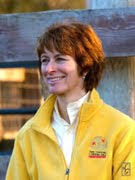
That's where wonderful people like Peggy Cummings can help. Her methods of "Connected Groundwork" use soft, slow techniques that create a way to release tension and overcome bracing. At first, it seemed as if she was holding a horse too close to their face and head on a halter with fleece cushions that would encourage leaning and pushing, but when done correctly, it gives the horse the skills to carry himself and connects the hindquarters which create the power, to the rest of his body. It was subtle and elegant. There was a dramatic improvement in several of the horses, most evident in a big warmblood, whose tension in the neck and poll had created a very dangerous habit of swinging his head rapidly and vigorously towards his handler. Peggy very calmly explained that he was looking for a place to push against to release the tension. Skeptical, I couldn't stop thinking that this horse was using his head to push Peggy away and avoid being asked to move his body, which is true, but it was because he felt tension and pain. He was perfectly happy to move, once the brace and tension was out of his body. With just two 15 minute sessions, Peggy accomplished exactly that. BEAUTIFUL!
The riding just flowed from these wonderful beginnings and now I have yet another way of enriching the relationships I have with my horses and the horses of my students. If this has helped me to relieve some of the tension in their lives as they've helped me relieve stress in my life, then it will be a fair exchange. Breaking a habit is not easy, but the first step is in recognizing it and doing something different, hopefully improving on the situation. Next time your horse acts up, resists, pulls to the right, trips, moves out slowly or any host of "issues", ask yourself, where is the tension? What is my horse trying to tell me?
P.S. One thing that was not addressed was the horses feet. Several of the horses were shod and both shod and unshod horses showed signs of heels that were too low, toes too long in the front with obvious low coffin bones and subsequent toe walking. The effect this has on their knees, shoulders and back cannot be minimized and creates its own tension and resistance when left unchecked. Assessing hoof health is another part of the "big picture". C.M.
Monday, February 22, 2010
Spring in Paradise
Just when I thought that all of the rain was going to get me down, the weather has been magnificent (60 and sunshine yesterday). My daughter was home from college and it was a rare treat to be able to take Sal and Chanty out to the beach and ride with her. She doesn't get on the horses very often and she commented that she was not used to using her inner thigh muscles to ride....and she's only 20 years old! Is it any wonder that those that begin riding over 40, go through a great deal of physical strain to get it right. It just proves that it is not about "just sitting" on the back of the horse. If you're doing it right, you are exercising and when it goes well and you get off without being sore, then you really know it's working for you!
I had been riding up and down the driveway at the new stables, while the arena dries out and the surface settles. At first I thought that it would not be the type of workout that I was looking for-I was wrong. Riding straight lines, then curves in the road (this is a LONG driveway) with the change in surface height was perfect for strengthening and balancing my horses' bodies. There was one very big puddle that Chanty did not want to go through. We worked on it several days in a row and she is now much braver and able to trot through. She is doing circles around the pile of gravel and the uneveness and change in surface, really challenges her to keep her balance and stay at the same gait with speed and rhythm maintained. Who knew that riding on the driveway would be the best workout she's had yet!
But, the real dream is to complete a "Paddock Paradise". This is an idea and a book, first published by Jaime Jackson, a natural hoof care specialist who is now the executive director of the AANHCP (Association for the Advancement of Natural Hoof Care Practices). The idea is to keep your horse in as natural an environment as possible. Jackson based his ideas on observations made with the wild horse. He was able to determine that the horse normally travels along particular paths that take him past feeding areas, shelter and watering holes. In the process, his movement creates constant wear and tear to the hoof that creates the perfect foot, designed to travel over the terrain they live on. The hoof wall develops a beautiful "mustang roll", the soles are thickened and callused for protection and the frog is wide and toughened-just what we seek in our trimming to keep our horses moving and sound.
He also observed how well the horses maintained their weight and muscle tone. They were moving constantly with very little time spent in large grazing areas of lush green grass, that we consider optimal for horses. Their interaction with each other was that of typical herd behavior and he was able to see first hand how the hierarchy of the herd is established- lead mares and their young, stallions with their bands and all of the dynamics of the group. Their emotional, mental and physical needs were all being met! Surprisingly, the total area that they travelled in was not enormous. They simply moved in a clockwise direction, along a winding path, that switched back and forth. Sounds like something you could recreate on your property, right?
I am especially interested in the idea of putting my horse on a "Paddock Paradise", as they have both had significant laminitis/founder and need to have as little grass and grazing as possible. They need to move and exercise their mind and body. Sally was especially stiff yesterday after being in her stall/run for the previous 3 days, while I worked. I now warm her up with a quick massage, stretching and then light movement on the ground to get her to move her hindquarters on a circle, asking her to step under. But, she needs daily movement to keep her joints and muscles in shape. She will be 20 this year and it is time for me to give her the environment she needs to get out and about. That's where the PP becomes important. I've picked up Jackson's book again and have reviewed the important features. He now has a website that gives even more info and links to several sites that will be helpful, including one that has videos of REAL PPs. I highly recommend both sources. (Note: If you are a member of Your Horse Matters , you can receive a free copy of Jackson's book-find out more at the "Members Only" page).
I am going to start small, with an area that I can reasonably afford to fence. I'll need to reduce the amount of grass on the trail and add some sand and rock along the way. It will be for Sally and Chanty initially but I'm hoping we'll be able to expand it over time and add different features, like bridges and obstacles, as well as shelters along the way. This is going to be a challenge, but I think it's worth it. It just isn't natural to make a 900 pound horse stand in area smaller than most dog runs. There happiness and health is in our hands and I'm ready to make their days better. Look at that....another sunshiney day outside. Gotta go!
I had been riding up and down the driveway at the new stables, while the arena dries out and the surface settles. At first I thought that it would not be the type of workout that I was looking for-I was wrong. Riding straight lines, then curves in the road (this is a LONG driveway) with the change in surface height was perfect for strengthening and balancing my horses' bodies. There was one very big puddle that Chanty did not want to go through. We worked on it several days in a row and she is now much braver and able to trot through. She is doing circles around the pile of gravel and the uneveness and change in surface, really challenges her to keep her balance and stay at the same gait with speed and rhythm maintained. Who knew that riding on the driveway would be the best workout she's had yet!
But, the real dream is to complete a "Paddock Paradise". This is an idea and a book, first published by Jaime Jackson, a natural hoof care specialist who is now the executive director of the AANHCP (Association for the Advancement of Natural Hoof Care Practices). The idea is to keep your horse in as natural an environment as possible. Jackson based his ideas on observations made with the wild horse. He was able to determine that the horse normally travels along particular paths that take him past feeding areas, shelter and watering holes. In the process, his movement creates constant wear and tear to the hoof that creates the perfect foot, designed to travel over the terrain they live on. The hoof wall develops a beautiful "mustang roll", the soles are thickened and callused for protection and the frog is wide and toughened-just what we seek in our trimming to keep our horses moving and sound.
He also observed how well the horses maintained their weight and muscle tone. They were moving constantly with very little time spent in large grazing areas of lush green grass, that we consider optimal for horses. Their interaction with each other was that of typical herd behavior and he was able to see first hand how the hierarchy of the herd is established- lead mares and their young, stallions with their bands and all of the dynamics of the group. Their emotional, mental and physical needs were all being met! Surprisingly, the total area that they travelled in was not enormous. They simply moved in a clockwise direction, along a winding path, that switched back and forth. Sounds like something you could recreate on your property, right?
I am especially interested in the idea of putting my horse on a "Paddock Paradise", as they have both had significant laminitis/founder and need to have as little grass and grazing as possible. They need to move and exercise their mind and body. Sally was especially stiff yesterday after being in her stall/run for the previous 3 days, while I worked. I now warm her up with a quick massage, stretching and then light movement on the ground to get her to move her hindquarters on a circle, asking her to step under. But, she needs daily movement to keep her joints and muscles in shape. She will be 20 this year and it is time for me to give her the environment she needs to get out and about. That's where the PP becomes important. I've picked up Jackson's book again and have reviewed the important features. He now has a website that gives even more info and links to several sites that will be helpful, including one that has videos of REAL PPs. I highly recommend both sources. (Note: If you are a member of Your Horse Matters , you can receive a free copy of Jackson's book-find out more at the "Members Only" page).
I am going to start small, with an area that I can reasonably afford to fence. I'll need to reduce the amount of grass on the trail and add some sand and rock along the way. It will be for Sally and Chanty initially but I'm hoping we'll be able to expand it over time and add different features, like bridges and obstacles, as well as shelters along the way. This is going to be a challenge, but I think it's worth it. It just isn't natural to make a 900 pound horse stand in area smaller than most dog runs. There happiness and health is in our hands and I'm ready to make their days better. Look at that....another sunshiney day outside. Gotta go!
Friday, February 12, 2010
It's Like Breathing Out and Breathing In
It's time to go to a few new clinics and get the cobwebs out of my brain. It just isn't enough to read a book or watch a video to improve my horsemanship and riding. It's fun to listen to someone and watch actual demonstrations or if possible ride in a clinic with an experienced instructor. In preparation for a Centered Riding Clinic I have read a small, but very powerful book by Tom Nagel, called Zen and Horse Backriding. Tom is an instructor and advanced practitioner of Zen bodytherapy and his book is his special approach to riding that combines posture, breathing and body awareness. He especially emphasizes the use of a very powerful muscle, the psoas, which allows us as riders to lengthen our lower spine, tone the seat and inner thigh muscles and provide stability over the horse. It is that stability that gives a rider the confidence to take their horse through greater physical and mental challenges.
I've been working very hard on improving the quality of my transitions, especially my downward transitions and I think this approach to it with its practical steps, is going to make the difference. We've all probably heard about the technique that involves exhaling to get our horse to slow or stop. But, did you know why this works so well? Recently, I started suggesting to my students that if they wanted to drop their lower spine into the saddle, they could simply cough each time they felt like they were hollowing their back, as a way to remind them. There is no way to cough and keep your back hollow and your lower abdomen expanded. A cough is just an exhale that lasts seconds. The psoas in its attachments below the diaphragm pushes the air out as the muscle lengthens downward. At the same time the upper back and spine at the neck is lengthened upward as the muscles at the neck allow the head to move at the atlas joint just between your ears. Try coughing and feel how your back lowers, your buttocks make better contact with your seat.
When you practice the inhale and exhale to slow or stop your horse, you are practicing a means to make contact with your seat and inner thighs, as this same psoas muscle connects from the lower back through the front of the pelvis and on to the top of the femur or leg bone. I've tried the inhale and exhale exercise and with practice have been able to slow my horse within the same gait, what dressage riders call a "half halt" or what western riders might call "rating" your horse, especially in barrel racing, described as a deep relaxation or "melting" into the saddle to slow your horse down.
Can it really be as simple as breathing in and breathing out? Well, this is horse backriding and if you are in it for the long haul, then you've noticed that there's nothing simple about being a good rider. It occured to me recently that there is no other physical activity that involves 2 living creatures in direct physical contact with each other, requiring each of them to be in balance while being strong and flexible enough to move as one- except maybe dancing and pairs skating. But that's TWO HUMANS. We're talking about being on a very large 4 legged creature, with all of its emotional and physical attributes, anyone of which can alter the course of things in or out of the saddle.
So, if you want a great little book that teaches you how to use your breathing and your posture to improve your riding, check out Tom Nagel's book. I'm looking forward to seeing him in person and learn just how "simple" it is to use a breath to control a horse.
I've been working very hard on improving the quality of my transitions, especially my downward transitions and I think this approach to it with its practical steps, is going to make the difference. We've all probably heard about the technique that involves exhaling to get our horse to slow or stop. But, did you know why this works so well? Recently, I started suggesting to my students that if they wanted to drop their lower spine into the saddle, they could simply cough each time they felt like they were hollowing their back, as a way to remind them. There is no way to cough and keep your back hollow and your lower abdomen expanded. A cough is just an exhale that lasts seconds. The psoas in its attachments below the diaphragm pushes the air out as the muscle lengthens downward. At the same time the upper back and spine at the neck is lengthened upward as the muscles at the neck allow the head to move at the atlas joint just between your ears. Try coughing and feel how your back lowers, your buttocks make better contact with your seat.
When you practice the inhale and exhale to slow or stop your horse, you are practicing a means to make contact with your seat and inner thighs, as this same psoas muscle connects from the lower back through the front of the pelvis and on to the top of the femur or leg bone. I've tried the inhale and exhale exercise and with practice have been able to slow my horse within the same gait, what dressage riders call a "half halt" or what western riders might call "rating" your horse, especially in barrel racing, described as a deep relaxation or "melting" into the saddle to slow your horse down.
Can it really be as simple as breathing in and breathing out? Well, this is horse backriding and if you are in it for the long haul, then you've noticed that there's nothing simple about being a good rider. It occured to me recently that there is no other physical activity that involves 2 living creatures in direct physical contact with each other, requiring each of them to be in balance while being strong and flexible enough to move as one- except maybe dancing and pairs skating. But that's TWO HUMANS. We're talking about being on a very large 4 legged creature, with all of its emotional and physical attributes, anyone of which can alter the course of things in or out of the saddle.
So, if you want a great little book that teaches you how to use your breathing and your posture to improve your riding, check out Tom Nagel's book. I'm looking forward to seeing him in person and learn just how "simple" it is to use a breath to control a horse.
Monday, February 1, 2010
Guardians of the Horse
Hello horse lovers! Is it spring yet? Yikes! It is taking a lot more effort this year to get the enthusiasm going. What do you do to get yourself moving? This past month I literally moved, horses, that is, and now have the girls out at my friend's place. They have their own personal run out back of their stalls and we've noticed a couple of things. First, the horses seem to like standing outside in their paddocks rain or shine, day or night time. Two of the horses, especially like the outdoors-one who had spent the first 4 years of his life in a round pen, knee deep in his own manure. He seems to feel comfortable out and about and loves to peek into the stall next to his where my mare Sal lives. The other gelding has spent the last 7 yrs in a very small stall and was developing swelling in his front legs as a regular occurence. He now stands outside all day and his owner closes his door at night as she thinks he'll stay out in the rain.
The other thing I've noticed is that my gal Sal's coat has become shiny again with no fungal infection in the mane and on the legs. Turns out that the high level of iron in the well water at our previous facility, mixed with the iron in her hay and low starch feed, triggered ongoing insulin resistance that raised her blood sugars. I might as well have skipped the change in feed. I had been trying to bring my own water in, but when the horses were in their paddocks out on the property, there was no way to haul fresh water to them and so they drank fresh water in their stall and well water in the paddocks. I've continued to search the internet for more info, but as was true just 5 yrs ago when my horse foundered for the last time, there is just not enough known about the triggers for laminitis. The average vet doesn't learn enough about hoof care and laminitis at school and any vet more than 10 yrs out of school is clueless unless they keep up their education or they are especially interested in hoof care. Of course, I always look to Pete Ramey's site for the most updated info. His videos now feature particular cases of hoof disease and how to care for the horse through diet and correct trimming.
When it comes to diet, even the horses who've never had laminitis or founder can go out on pasture and eat themselves into laminitis. Their feet will even feel a little warmer than usual, as my friend so astutely noticed when she went to pick her mare's feet, after spending several hours on grass in her newly fenced pastures. Another young horse at the stables is struggling with a case of colic which started before the move.
It all reminds me that we are the guardians of our horse's emotional and physical well being. We ask them to eat and drink what we give them, but is it more than they need? In the wild, horses are grazers that move constantly, eating a lot of forage and dried vegetation, not grain and high sugar foods like carrots, apples and sweet treats. They move about 20 miles a day and drink fresh water in different locations, interacting with a large herd of horses, yet we house them in small pens or paddocks isolated from each other. Exercise comes in small spurts and I've noticed that Sal's muscle tone has suffered from the lack of activity when I felt that her hock arthritis was severe enough to limit how much I rode her. She still needed to keep MOVING!
So, as usual, I begin to beat myself up for keeping my horses in an environment that is convenient for me, not my horses. I have to keep my promise to make each day with the them as stimulating as possible. I've begun learning some massage techniques, allow them to run in a very large outdoor arena and ride them as much as possible, even if it's up the long driveway of the new facility.
Our hope is to build an obstacle course this summer and my DREAM is to build a paddock paradise, that allows the horses to move constantly around an area that simulates the movement in the wild that takes them in a loop through their natural territory, able to slowly graze on small amounts of food, interact with other horses and most of all, stretch their legs and stimulate their feet to wear their hooves naturally. Sounds ideal!
Now that I'm energized, it's time to get out and spend time with my critters. They can't do it without us, so don't forget to be the best guardian possible. And enjoy your horse!
The other thing I've noticed is that my gal Sal's coat has become shiny again with no fungal infection in the mane and on the legs. Turns out that the high level of iron in the well water at our previous facility, mixed with the iron in her hay and low starch feed, triggered ongoing insulin resistance that raised her blood sugars. I might as well have skipped the change in feed. I had been trying to bring my own water in, but when the horses were in their paddocks out on the property, there was no way to haul fresh water to them and so they drank fresh water in their stall and well water in the paddocks. I've continued to search the internet for more info, but as was true just 5 yrs ago when my horse foundered for the last time, there is just not enough known about the triggers for laminitis. The average vet doesn't learn enough about hoof care and laminitis at school and any vet more than 10 yrs out of school is clueless unless they keep up their education or they are especially interested in hoof care. Of course, I always look to Pete Ramey's site for the most updated info. His videos now feature particular cases of hoof disease and how to care for the horse through diet and correct trimming.
When it comes to diet, even the horses who've never had laminitis or founder can go out on pasture and eat themselves into laminitis. Their feet will even feel a little warmer than usual, as my friend so astutely noticed when she went to pick her mare's feet, after spending several hours on grass in her newly fenced pastures. Another young horse at the stables is struggling with a case of colic which started before the move.
It all reminds me that we are the guardians of our horse's emotional and physical well being. We ask them to eat and drink what we give them, but is it more than they need? In the wild, horses are grazers that move constantly, eating a lot of forage and dried vegetation, not grain and high sugar foods like carrots, apples and sweet treats. They move about 20 miles a day and drink fresh water in different locations, interacting with a large herd of horses, yet we house them in small pens or paddocks isolated from each other. Exercise comes in small spurts and I've noticed that Sal's muscle tone has suffered from the lack of activity when I felt that her hock arthritis was severe enough to limit how much I rode her. She still needed to keep MOVING!
So, as usual, I begin to beat myself up for keeping my horses in an environment that is convenient for me, not my horses. I have to keep my promise to make each day with the them as stimulating as possible. I've begun learning some massage techniques, allow them to run in a very large outdoor arena and ride them as much as possible, even if it's up the long driveway of the new facility.
Our hope is to build an obstacle course this summer and my DREAM is to build a paddock paradise, that allows the horses to move constantly around an area that simulates the movement in the wild that takes them in a loop through their natural territory, able to slowly graze on small amounts of food, interact with other horses and most of all, stretch their legs and stimulate their feet to wear their hooves naturally. Sounds ideal!
Now that I'm energized, it's time to get out and spend time with my critters. They can't do it without us, so don't forget to be the best guardian possible. And enjoy your horse!
Friday, January 1, 2010
A New Year of Horsemanship
HAPPY NEW YEAR!
Wow, has another year gone by! It doesn't seem possible. I've been looking through my previous blogs to see just how far I've come as a horsewoman (and a person) and as I continue to watch the latest or recently acquired video in my collection, I'm able to quickly see how much progress I've made with my horsemanship. As I've become a better student, so will I become a better teacher both to my horse and students.
At least, that's the goal. It is an ongoing process that should never end. For so many though, it never starts and so the frustration of horse ownership sets in pretty quickly. On these cloudy, rainy, cold winter days, it can be difficult to muster up the enthusiasm to go out and engage with your horse, let alone ride. We tend to think that as long as their stalls are clean and they have enough food, water and a few hours outside, that our job is done. For those of us in it for the long haul, it takes more energy, enthusiasm and imagination to keep the interest alive and to make the horse's life more mentally and physically stimulating. Yes, it's a challenge. So, I keep on watching and learning.
I've even started putting together a mental checklist when I see someone new or evaluate previously viewed trainers/clinicians. I have noticed something interesting in western riding or "natural horsemanship". It is my observation that there are very few men who address the issue of correct riding. Their focus is usually on the horse's behavior and training. The riding instruction comes from women trainers mostly. Many Western trainers will actually omit any specific instructions to the rider as if it is only the horse who exists in the relationship. We are merely a passenger. The horse is being difficult and speeding up or kicking out simply because we haven't executed the right one rein pull or used our leg and rein pull to move the horses hindquarter. Maybe a more severe bit is necessary for that "dull" horse. And there is a lot of pulling going on in Western riding including the "seesawing" that is so common in Western Pleasure with two reins that makes me cringe!!!
English or classical riding instruction videos tend to forget that the horse is part of the picture and that many riders can be given instructions on correct hand, seat and leg position and yet, not have a clue how to get their horse to stand still when they mount, cannot lead their horse from the paddock without holding close to the halter, do not know how to ask their horse to quietly stand to be groomed or for hoof care and a whole host of groundwork issues that show up. It is very common to have someone "hold your horse" while you get on, fully expecting them to pace and turn away and walk immediately once you mount. I, on the other hand, fully expect my horse to stand quietly, even when not tied while I groom, trim, saddle and mount.
As a well rounded horsewoman I need to be aware of BOTH parties in the relationship. We both have a responsibility. For the rider, she must understand what makes a horse tick, their behaviors, their personalities, their innate characteristics. Don't assume that a horse is being "disrespectful" or that there are previous abuses causing the current problems. Learn to recognize physical signs and symptoms of horse's difficulties with movement that influences behavior and their ability to respond to your training or riding. In short, EDUCATE YOURSELF.
But does the average horse owner have time for this-unfortunately the answer is no. We all have jobs, families, outside commitments and interests that sometimes place our horse at the bottom of the priority list. This week I worked extra hours to help increase our savings for future unexpected expenditures. I haven't seen much of my horses this week and I haven't ridden but once in a week. I've tried to spend a few moments looking at some books and videos in preparation for my next lesson with students. It helps to have a mental checklist and find the information that most consistently appears; tips to make my riding and my students riding enjoyable for them AND their horses. I've found that there a several things to look for when reviewing new material:
1) Is the material given in a structured, simple educational format or is it just an informational video that says WHAT is being done, but not WHY or HOW or what to do if it's not working for you? Can you easily repeat what is being done, when you work with your horse or ride?
2)Does it show well behaved, trained school horses with experienced riders only or do they use any untrained horses with inexperienced riders.
3)Are they encouraging safety in riding and working with the horse. Do the riders wear helmets or explain why they do not? Do they emphasize safety ONLY on the ground?
4) Do they explain techniques that can be used for ALL disciplines or is it strictly for "western" or "english" and what does that mean? Shouldn't good riding and horsemanship be applied across the board? Are the techniques easy to duplicate?
5) Do the trainers explain how much the horse's physical abilities or lack of contribute to difficulty with training and riding and behavior issues? Is stubborness, dull mouth, lack of respect or difficult personality for example, used to explain away behavior problems, solved only with more tools or severe handling of the horse's mouth and/or body for control of overall movement?
6) Does the trainer/clinician understand and utilize the idea of balance in the rider AND the horse and explain how these can be achieved separately, then together? Are there specific exerises given to practice and improve balance and movement for both? Do these methods work consistently for you and your horse when you use them?
Of course, I'm sure it's difficult for one person to include both training of the horse from the beginning on the ground to under saddle as well as help for the rider in one video. There are many who try to cover it over a series of videos. They sometimes share the task with their partner, one knowing more about the horse (presumably) and one knowing (hopefully) more about the rider.
But, knowing how much it cost to purchase these videos, you might say that it can be very expensive to take a chance on what you may or may not get out of the videos. Many clinicians and trainers are also good promoters, salesmen/women and have been able to get more attention for their videos. That doesn't mean they are giving you what you need to make your horsemanship experience fun and rewarding. It just means they've got your attention and/or your money.
My advice in the new year is to do whatever you can to make the best of your days with your horse. Buy, rent or borrow books and videos. Take a friend and go to a three day expo and learn whatever you can, go to a clinic, watch programs on cable or satellite TV. Find a good instructor (get references and take a few lessons to see if you like the instructor), ask an experienced horseman/woman who you know has great results and treats their horses with kindness and respect, to help you. Do SOMETHING!-and enjoy the coming year. If you're in the small minority of people who own horses, you may still be a horseowner in 2011. I know I will!
Wow, has another year gone by! It doesn't seem possible. I've been looking through my previous blogs to see just how far I've come as a horsewoman (and a person) and as I continue to watch the latest or recently acquired video in my collection, I'm able to quickly see how much progress I've made with my horsemanship. As I've become a better student, so will I become a better teacher both to my horse and students.
At least, that's the goal. It is an ongoing process that should never end. For so many though, it never starts and so the frustration of horse ownership sets in pretty quickly. On these cloudy, rainy, cold winter days, it can be difficult to muster up the enthusiasm to go out and engage with your horse, let alone ride. We tend to think that as long as their stalls are clean and they have enough food, water and a few hours outside, that our job is done. For those of us in it for the long haul, it takes more energy, enthusiasm and imagination to keep the interest alive and to make the horse's life more mentally and physically stimulating. Yes, it's a challenge. So, I keep on watching and learning.
I've even started putting together a mental checklist when I see someone new or evaluate previously viewed trainers/clinicians. I have noticed something interesting in western riding or "natural horsemanship". It is my observation that there are very few men who address the issue of correct riding. Their focus is usually on the horse's behavior and training. The riding instruction comes from women trainers mostly. Many Western trainers will actually omit any specific instructions to the rider as if it is only the horse who exists in the relationship. We are merely a passenger. The horse is being difficult and speeding up or kicking out simply because we haven't executed the right one rein pull or used our leg and rein pull to move the horses hindquarter. Maybe a more severe bit is necessary for that "dull" horse. And there is a lot of pulling going on in Western riding including the "seesawing" that is so common in Western Pleasure with two reins that makes me cringe!!!
English or classical riding instruction videos tend to forget that the horse is part of the picture and that many riders can be given instructions on correct hand, seat and leg position and yet, not have a clue how to get their horse to stand still when they mount, cannot lead their horse from the paddock without holding close to the halter, do not know how to ask their horse to quietly stand to be groomed or for hoof care and a whole host of groundwork issues that show up. It is very common to have someone "hold your horse" while you get on, fully expecting them to pace and turn away and walk immediately once you mount. I, on the other hand, fully expect my horse to stand quietly, even when not tied while I groom, trim, saddle and mount.
As a well rounded horsewoman I need to be aware of BOTH parties in the relationship. We both have a responsibility. For the rider, she must understand what makes a horse tick, their behaviors, their personalities, their innate characteristics. Don't assume that a horse is being "disrespectful" or that there are previous abuses causing the current problems. Learn to recognize physical signs and symptoms of horse's difficulties with movement that influences behavior and their ability to respond to your training or riding. In short, EDUCATE YOURSELF.
But does the average horse owner have time for this-unfortunately the answer is no. We all have jobs, families, outside commitments and interests that sometimes place our horse at the bottom of the priority list. This week I worked extra hours to help increase our savings for future unexpected expenditures. I haven't seen much of my horses this week and I haven't ridden but once in a week. I've tried to spend a few moments looking at some books and videos in preparation for my next lesson with students. It helps to have a mental checklist and find the information that most consistently appears; tips to make my riding and my students riding enjoyable for them AND their horses. I've found that there a several things to look for when reviewing new material:
1) Is the material given in a structured, simple educational format or is it just an informational video that says WHAT is being done, but not WHY or HOW or what to do if it's not working for you? Can you easily repeat what is being done, when you work with your horse or ride?
2)Does it show well behaved, trained school horses with experienced riders only or do they use any untrained horses with inexperienced riders.
3)Are they encouraging safety in riding and working with the horse. Do the riders wear helmets or explain why they do not? Do they emphasize safety ONLY on the ground?
4) Do they explain techniques that can be used for ALL disciplines or is it strictly for "western" or "english" and what does that mean? Shouldn't good riding and horsemanship be applied across the board? Are the techniques easy to duplicate?
5) Do the trainers explain how much the horse's physical abilities or lack of contribute to difficulty with training and riding and behavior issues? Is stubborness, dull mouth, lack of respect or difficult personality for example, used to explain away behavior problems, solved only with more tools or severe handling of the horse's mouth and/or body for control of overall movement?
6) Does the trainer/clinician understand and utilize the idea of balance in the rider AND the horse and explain how these can be achieved separately, then together? Are there specific exerises given to practice and improve balance and movement for both? Do these methods work consistently for you and your horse when you use them?
Of course, I'm sure it's difficult for one person to include both training of the horse from the beginning on the ground to under saddle as well as help for the rider in one video. There are many who try to cover it over a series of videos. They sometimes share the task with their partner, one knowing more about the horse (presumably) and one knowing (hopefully) more about the rider.
But, knowing how much it cost to purchase these videos, you might say that it can be very expensive to take a chance on what you may or may not get out of the videos. Many clinicians and trainers are also good promoters, salesmen/women and have been able to get more attention for their videos. That doesn't mean they are giving you what you need to make your horsemanship experience fun and rewarding. It just means they've got your attention and/or your money.
My advice in the new year is to do whatever you can to make the best of your days with your horse. Buy, rent or borrow books and videos. Take a friend and go to a three day expo and learn whatever you can, go to a clinic, watch programs on cable or satellite TV. Find a good instructor (get references and take a few lessons to see if you like the instructor), ask an experienced horseman/woman who you know has great results and treats their horses with kindness and respect, to help you. Do SOMETHING!-and enjoy the coming year. If you're in the small minority of people who own horses, you may still be a horseowner in 2011. I know I will!
Friday, December 4, 2009
Your Horse as an Athlete
We have had some incredibly sunny weather here in the NW, making it very cold at night. As with every year, I'm aware of just how "furry" my horses get and if the temp drops too low, I will put their blankets on for warmth. But, usually, it just isn't necessary. What I have begun doing, though, is warming up their muscles before I exercise them. I've begun doing some simple massage techniques as well as stretching and what's interesting is to feel the difference between Chanty, who has no feet or lameness issues and Sal who has had founder and hock problems over the years. You can see how little she moves her hips, feel how hard and tight her back and gluteal hip muscles are and see how much she shortens her stride with the tightness on both sides of her body. Sally is a virtual treasure trove of issues for me to learn about and work on. I can see what abnormal looks like and then appreciate the improvement when I see it in her or other horses with less severe problems.
The massage with Chanty showed me that as I have been asking her to lift her back and use her hind quarters more, she is "feeling the burn". She reacts to the compressions over her hips and hindquarters as if there is a little soreness. Just as we need to go slow with our own bodies and not cram 6 mos of exercise and training into 1 week, we need to give our horse a chance to adapt to a regular program of exercise.
Ever since I returned from seeing Gerd Heuschmann's clinic, I've been focused on the idea of balancing my horse or I should say, asking her to balance herself. I am improving my balance in leaps and bounds and so it makes sense that she needs to take the responsibility for herself. He suggests that while you are helping your horse balance and lift his front end, that you hold the reins as you would the handle of a pot or pan, with the rein coming over the top of your first finger and down through your fist. This keeps your from pulling back, but instead, encourages you to lift your hands more, which is easier on the horse's mouth and discourages them from leaning on the bit.
With the weather so nice, I've been able to ride out on the new trail behind our facility. It has packed gravel, so much easier on the horse's feet and legs than the deep sand. When I want to take her up or down a hill, I think "lift your head", "don't fall" and it creates a slower, more balanced step in both directions, instead of rushing through the change in the incline of the trail. The difference is dramatic. It shows once again that behavior issues under saddle (racing ahead, changing direction suddenly, stopping or resisting in transitions) is not about the horse's attitude or stubborness, but their feeling of inbalance that creates emotional tension. Imagine being a new skiing student and being asked to take off down a slope without being balanced and you can sympathize with your horse better.
This week one of my students rode her 6 year old and worked on circles and bends, so important to flexing the body and allowing the muscles to strengthen equally with stretch that takes away the tension and resistance. With an occasional "lift"of her hands to encourage her horse to carry his own weight instead of falling onto her hands over the forehand, he began to look more coordinated. He was no longer walking with front legs crisscrossing in an obvious side to side movement that wreaked of inbalance. Now he walks out with feet forward and his back muscles sliding forward and back. She has a smoother ride, he's more comfortable and low and behold, she doesn't notice the behavior problems of pulling her in one direction, stopping, resisting her leg cues to move into a trot. It all looks beautiful-simply by allowing the horse to gain the flexibility and strength he needs to feel in balance.
How often do we blame our horse's attitude, stubborness and behavior for our difficulties under the saddle. When you watch a rider who sits off balance on their horse and then asks him to perform athletic movements quietly and proficiently, when the horse is also off balance, you will understand why there is so much struggle and frustration among riders and their horses. They, like you, are not able to simply get out of bed and be a coordinated, talent athlete. The best dancers, ball players, runners, tennis players, etc practice their talent all of the time and through many months and years of building their muscles, increasing their strength and flexibility and learning to adapt to new demands on their body, they improve their performance.
I know that most people just want to "get on and ride"and figure that their horse is like their car-just get in, turn on the key and go. And if you ask nothing of your horse accept to carry you straight from point A to point B with as little effort from you or him as possible, then you should also know that you will be limited to that very same activity from now on. It's when riders want to vary from the simple task of going straight ahead, to even asking their horse to circle one time, that they will notice how NOT simple the act of riding is for them and their horse.
When I was that skiing student years ago, I was left to my own devices on a bunny hill as my companion, skied off down the slope with beautiful movements side to side, flexing and bending his body to slow and turn. Knowing nothing, and allowing gravity to simply take me where it would, I headed straight down at full speed and was stopped only because I came close to a tree (after bumping into several other skiers) and sat down to avoid a terrible crash. I still managed to jam my thumb. My heart racing with total fright, I vowed never to ski again.
Why do we assume that a horse is emotionally,mentally and physically prepared to do everything we ask, with only a minimal amount of preparation and training. Until we think of our horses as athletes who need to mold their minds and bodies, so they can do more than walk a straight line from point A to point B, we are doomed to frustrate ourselves and them at the very least and at the worst, cause permanent physical damage. Unless, you like going straight at a walk all of the time. Not me....
The massage with Chanty showed me that as I have been asking her to lift her back and use her hind quarters more, she is "feeling the burn". She reacts to the compressions over her hips and hindquarters as if there is a little soreness. Just as we need to go slow with our own bodies and not cram 6 mos of exercise and training into 1 week, we need to give our horse a chance to adapt to a regular program of exercise.
Ever since I returned from seeing Gerd Heuschmann's clinic, I've been focused on the idea of balancing my horse or I should say, asking her to balance herself. I am improving my balance in leaps and bounds and so it makes sense that she needs to take the responsibility for herself. He suggests that while you are helping your horse balance and lift his front end, that you hold the reins as you would the handle of a pot or pan, with the rein coming over the top of your first finger and down through your fist. This keeps your from pulling back, but instead, encourages you to lift your hands more, which is easier on the horse's mouth and discourages them from leaning on the bit.
With the weather so nice, I've been able to ride out on the new trail behind our facility. It has packed gravel, so much easier on the horse's feet and legs than the deep sand. When I want to take her up or down a hill, I think "lift your head", "don't fall" and it creates a slower, more balanced step in both directions, instead of rushing through the change in the incline of the trail. The difference is dramatic. It shows once again that behavior issues under saddle (racing ahead, changing direction suddenly, stopping or resisting in transitions) is not about the horse's attitude or stubborness, but their feeling of inbalance that creates emotional tension. Imagine being a new skiing student and being asked to take off down a slope without being balanced and you can sympathize with your horse better.
This week one of my students rode her 6 year old and worked on circles and bends, so important to flexing the body and allowing the muscles to strengthen equally with stretch that takes away the tension and resistance. With an occasional "lift"of her hands to encourage her horse to carry his own weight instead of falling onto her hands over the forehand, he began to look more coordinated. He was no longer walking with front legs crisscrossing in an obvious side to side movement that wreaked of inbalance. Now he walks out with feet forward and his back muscles sliding forward and back. She has a smoother ride, he's more comfortable and low and behold, she doesn't notice the behavior problems of pulling her in one direction, stopping, resisting her leg cues to move into a trot. It all looks beautiful-simply by allowing the horse to gain the flexibility and strength he needs to feel in balance.
How often do we blame our horse's attitude, stubborness and behavior for our difficulties under the saddle. When you watch a rider who sits off balance on their horse and then asks him to perform athletic movements quietly and proficiently, when the horse is also off balance, you will understand why there is so much struggle and frustration among riders and their horses. They, like you, are not able to simply get out of bed and be a coordinated, talent athlete. The best dancers, ball players, runners, tennis players, etc practice their talent all of the time and through many months and years of building their muscles, increasing their strength and flexibility and learning to adapt to new demands on their body, they improve their performance.
I know that most people just want to "get on and ride"and figure that their horse is like their car-just get in, turn on the key and go. And if you ask nothing of your horse accept to carry you straight from point A to point B with as little effort from you or him as possible, then you should also know that you will be limited to that very same activity from now on. It's when riders want to vary from the simple task of going straight ahead, to even asking their horse to circle one time, that they will notice how NOT simple the act of riding is for them and their horse.
When I was that skiing student years ago, I was left to my own devices on a bunny hill as my companion, skied off down the slope with beautiful movements side to side, flexing and bending his body to slow and turn. Knowing nothing, and allowing gravity to simply take me where it would, I headed straight down at full speed and was stopped only because I came close to a tree (after bumping into several other skiers) and sat down to avoid a terrible crash. I still managed to jam my thumb. My heart racing with total fright, I vowed never to ski again.
Why do we assume that a horse is emotionally,mentally and physically prepared to do everything we ask, with only a minimal amount of preparation and training. Until we think of our horses as athletes who need to mold their minds and bodies, so they can do more than walk a straight line from point A to point B, we are doomed to frustrate ourselves and them at the very least and at the worst, cause permanent physical damage. Unless, you like going straight at a walk all of the time. Not me....
Subscribe to:
Posts (Atom)